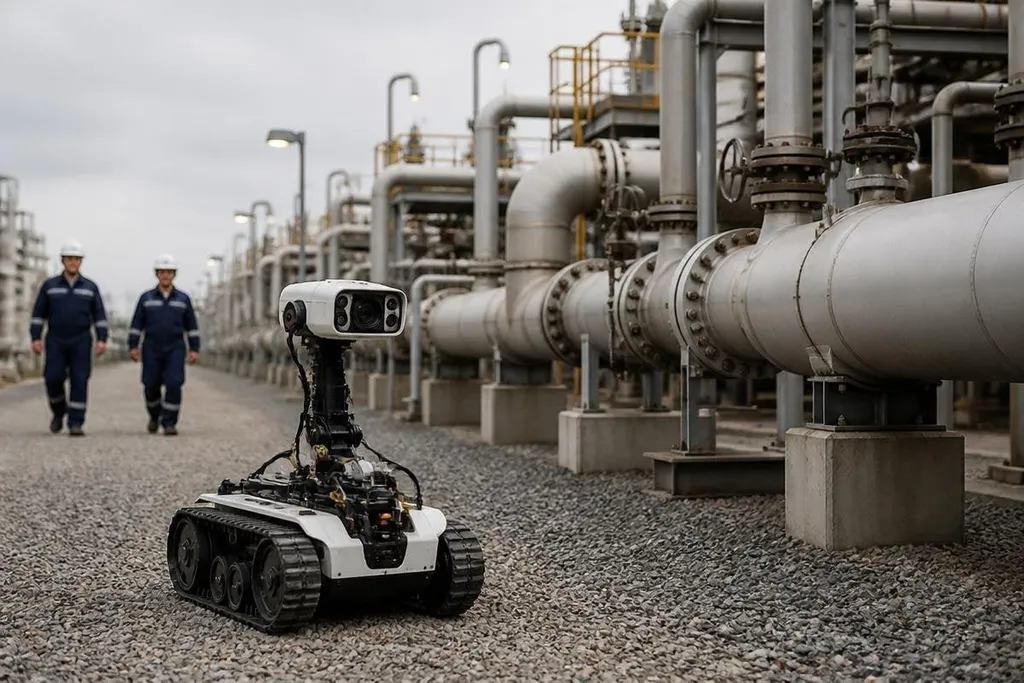
Energy robots work around pipes, tanks, cables, turbines, and other equipment that people may need to inspect from a distance. Software can help these robots sort sensor data, spot changes, and choose what to check next.
The hard part is proving that those choices are safe and useful outside a controlled test.
- Better inspection: cameras, thermal sensors, microphones, and LiDAR can feed one view of a site.
- Earlier warnings: software can compare new readings with earlier ones and flag changes for review.
- Less remote control: the robot may handle repeated movement while a person approves the next step.
Where AI helps first
A robot in an energy site may collect video, heat readings, sound, position data, and equipment measurements during one run. AI software can sort that stream and mark signs such as a changed surface, an unusual hot spot, or a sound that needs a closer check.
That saves time during review, but it doesn't replace a qualified inspection. A dirty camera lens can look like a surface fault. A hot valve may be working as designed. The software needs site records and a person who understands the equipment before a warning becomes a work order.
Route planning is another place AI can help. The robot builds a map from sensors, then selects a path around fixed objects and known hazards. If a gate is closed or a cable blocks the route, the system may stop, request help, or choose another path.
The useful measure is not whether the robot moves without a person. It is how often the robot finishes a task, how often it stops, and how long a technician spends checking its results.
What changes for energy teams
A good inspection system turns a robot run into a record that people can search later. Each image or sensor reading needs a location, a time, and enough detail to compare it with an earlier visit.
That record can help a maintenance team watch the same pump, pipe joint, or switch over time. The value comes from the comparison. A single image may show a mark; a series of images can show whether that mark is growing.
For an energy maintenance team, Robot24.com’s energy robotics coverage can add the robot, site, date, and result behind an inspection claim. That record gives you a firm point of reference before AI ranks the work.
AI may also sort jobs by urgency. A possible leak, a damaged guard, and a blocked access route don't belong in the same queue. The software can group findings, but the site's safety rules and inspection process still decide what happens next.
Where the system can fail
Energy sites are difficult places for machines. Metal surfaces can confuse cameras. Poor light can hide damage. Steam, dust, rain, vibration, and radio interference can affect sensors or communication.
The software can also repeat a bad assumption. If its training data contains clean equipment and clear images, it may perform poorly on old machinery or a new site layout. A high confidence score does not prove that the finding is correct.
Remote operation has limits too. A person may need to guide the robot through a narrow space, read a label, or decide if a sound is normal for that machine. That means the system needs a clear handoff between autonomous movement and human control.
I’d judge an energy robot by its missed faults and false alarms before its smooth demo videos. A system that finds more problems but sends technicians to inspect harmless marks all day may cost more than it saves.
A practical buying checklist
Use these questions before a pilot or purchase:
- Name the task: Can the team state the inspection job in one sentence?
- Check the data: Does the robot record location, time, sensor type, and the original image?
- Test normal faults: Has it seen dirt, glare, steam, rain, vibration, and known harmless marks?
- Set the handoff: Who reviews a warning, and how does the robot stop when the link fails?
- Count the work: Will the team track completed runs, missed findings, false alarms, and review time?
- Price the whole system: Include site setup, network access, robot charging, software, training, and maintenance.
The next useful step is a narrow pilot on equipment with a known inspection routine and a clear record of past findings. Until a system shows its error rate on that job, AI in energy robots is a promising tool under review, not a replacement for the people who keep the site safe.